

Planning a short trip to somewhere like Jamaica is stressful in a very specific way. You’ve only got 2 days in Montego Bay, which has way too many things to do, and suddenly you’re stuck between “I want to relax” and “I don’t want to miss out on anything.”
Do you stay at the beach the whole time?
Do you book excursions?
Are two days even enough to experience it properly?
Montego Bay isn’t about doing everything. It’s about doing the right mix of things so your trip actually feels good, not rushed. In just two days, you can have that perfect balance: beaches that don’t feel overcrowded, real Jamaican food (not just resort buffets), a bit of culture, a bit of adventure, and those random moments that end up being your favourite part of the trip.
This guide is exactly that.
A realistic, well-paced 2-day Montego Bay itinerary that helps you experience the best of it without overplanning every hour and without coming back feeling like you missed something.
Day 1: Ease Into Montego Bay (Beaches, Culture, First Taste of Jamaica)
You don’t land in Montego Bay and start rushing through plans. It’s the kind of place where things slow down on their own. The air feels warmer, everything moves a little easier, and before you even realise it, you’ve switched out of travel mode.
Montego Bay doesn’t make you wait for the trip to start. It begins almost immediately.
Late Morning: Beach First, Always
Your first proper stop in Montego Bay should be Doctor’s Cave Beach, because honestly, this is the kind of beach that makes you understand why people fly all the way to Jamaica and then immediately forget whatever stress they came with.
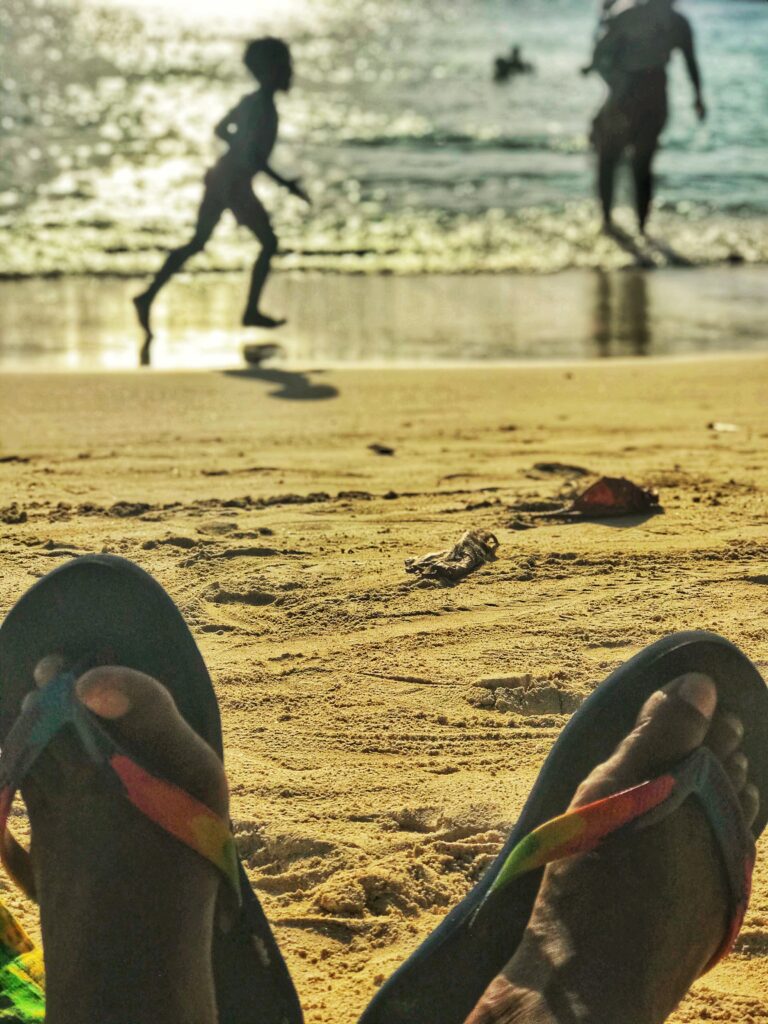
It sits right on Gloucester Avenue (along the Hip Strip), so you are not driving off into the middle of nowhere or planning some complicated beach mission. You walk in, pay the entrance fee, and suddenly the road noise starts to fade behind you. Doctor’s Cave Beach is currently listed by the official beach site as open 8:30 AM to 5:30 PM, with general admission at $8 USD for adults and $4 USD for children under 12, though it is always worth checking before you go because fees can change.
And then you see the water. It is that clear, soft-blue Caribbean water that almost looks edited in real life. The sea here is usually calm, which is one of the reasons Doctor’s Cave is such an easy first beach stop. You do not have to be doing anything happening. You can just walk in slowly, float for a while, and let your body catch up to the fact that you are actually in Montego Bay.
There are showers, bathrooms, and beach rentals like chairs and umbrellas, so it works well even if you are not staying at a beachfront resort. But the real joy is not in the facilities. It is in that first lazy hour when you are still slightly tired from travelling, your skin smells like sunscreen, and all you can hear is water, music somewhere in the distance, and people laughing around you.
I would not rush this part at all. Get there late morning, rent a chair if you want one, swim, come back out, sit under shade, and then go back in again. That is the whole point. Doctor’s Cave is not the beach you “tick off.” It is the beach where you properly arrive. Just a general reminder when you go to a public beach, keep an eye on your belongings because, you know, sometimes people will be people and do people things lol.
By the time you leave, your hair will probably be salty, your sandals will be full of sand, and you will already be moving a little slower. Perfect. That is exactly where you want to be.
Afternoon: The Hip Strip + Your First Real Jamaican Meal
Once you have had enough beach time, step back out onto Gloucester Avenue, better known as the Hip Strip. This is one of Montego Bay’s most tourist-friendly areas, but it still has that lively Jamaican street energy: music coming from different directions, souvenir shops, bars, food spots, people calling out to each other, taxis passing by, and the ocean never too far away.
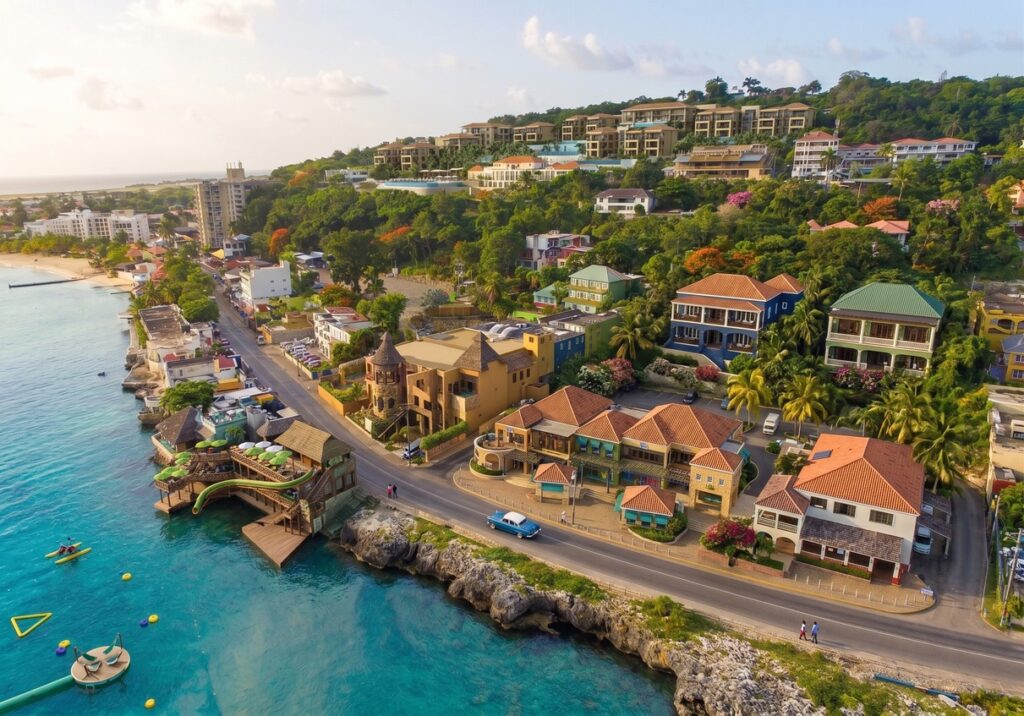
For your first proper Jamaican meal in Montego Bay, keep it simple and go for the classics. Jerk chicken is the obvious one, and if you want somewhere well-known, The Pork Pit is often mentioned for jerk chicken, pork, and fish in the Gloucester Avenue/Hip Strip area. It is the kind of food you smell before you order: smoky, spicy, charred at the edges, usually served with sides like rice and peas, festival, yams, or breadfruit.
This is not the moment for a fancy, over-planned lunch. Order the jerk chicken, get something cold to drink, and sit with it. The flavour is not just “spicy.” It is smoky, warm, a little sweet, and properly seasoned all the way through.
If you want something quick while walking, grab a Jamaican patty too. It is flaky, golden, warm, and filled with beef, chicken, or sometimes vegetables. It is the kind of snack you think will just be a small bite, and then suddenly you are wondering why every country does not have its own version of this.
You can also stop for coconut water, a local soda, or fresh juice if you see it. Montego Bay feeds you best when you follow the smell, ask what is good, and let the day unfold a little.
After lunch, wander the Hip Strip slowly. Pop into a shop, look at the little souvenirs, listen to the music spilling out of nearby bars, and just people-watch for a bit. This area is popular with visitors because it is easy, central, and close to the beach, but it is also a good place to feel that first burst of Montego Bay’s personality.
Late Afternoon: Bamboo Rafting on the Martha Brae River
By the time you’ve had your beach moment and wandered the Hip Strip a bit, you’ll probably feel that shift; you’re relaxed, a little sun-tired, and not really in the mood for anything loud or hectic.
That’s exactly when you go to the Martha Brae River.
It’s about a 25–30 minute drive from Montego Bay, and most hotels or tour providers can arrange transport for you (honestly, it’s easier than figuring it out yourself). If you’re going independently, just know it’s well-signposted and very popular, so you won’t feel lost. Be sure to check on your travel time and operating hours before you go, as they close at 4 pm.
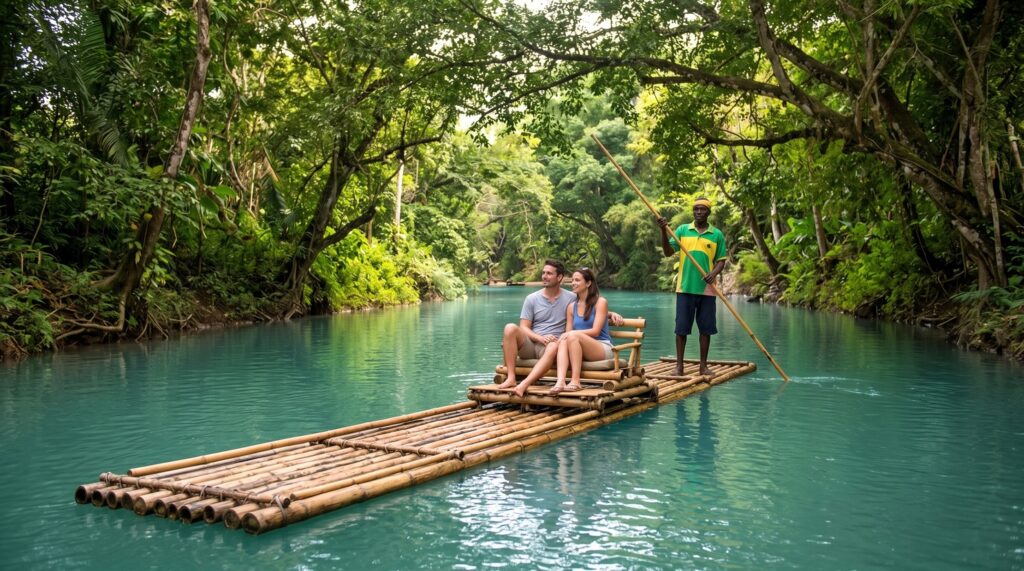
When you arrive, it’s all pretty organised; you check in, get assigned a raft captain, and then walk down to the river where all the bamboo rafts are lined up.
Each raft usually takes two people, so it’s quite private and calm, not crowded or chaotic.
And then… You just go.
The ride itself is about an hour, sometimes a little longer if the river is slow, and it’s exactly what it sounds like: gentle, steady, and quiet. Your guide stands at the back and pushes the raft along using a long bamboo pole, as if it’s the most natural thing in the world.
You’re not doing anything but just sitting, feet tucked up or dangling slightly, watching the trees pass by.
A few small things to know that make it nicer:
- Wear something light, as you’ll still feel warm even on the water
- Bring some cash (there are optional things like a quick limestone foot massage or a stop at a tiny riverside bar)
- Don’t expect a strong network, as this is your little offline moment
Your guide will usually chat a bit if you’re in the mood about the river, local stories, sometimes just casual conversation, but they’re also good at reading the vibe if you just want quiet.
It’s one of the most popular things to do in a 2-day in Montego Bay itinerary, but it never feels rushed when you’re actually on it. It’s slow in a way that’s hard to find in most trips.
And weirdly, it’s often the part people remember the most.
Evening: Rum Tasting + Slow Dinner
Back in Montego Bay, this is where your day softens again, but in a different way.
You’re clean, slightly tired, maybe still thinking about that quiet river, and now you step into something very Jamaican: rum.
Rum is everywhere here, but taking a moment to actually taste it properly is a different experience.
If you have time earlier in your trip, visiting Appleton Estate is amazing; it’s one of the oldest rum distilleries in Jamaica. Just keep in mind it’s about a 2-hour drive, so it works better as a planned half or full-day trip.
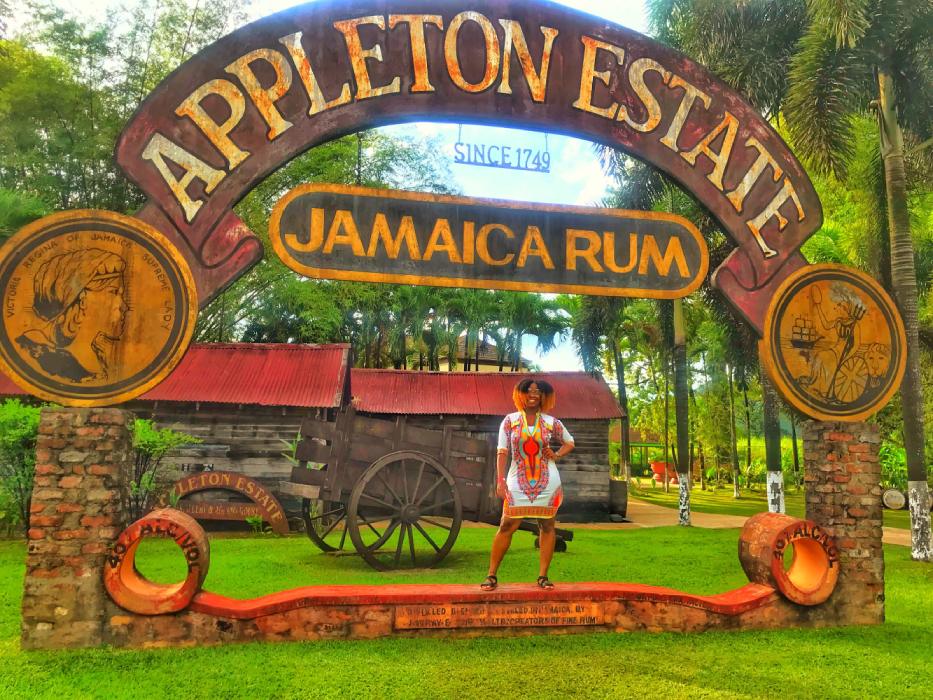
For this evening, it’s much easier to stay in Montego Bay and do a tasting at a good bar, restaurant, or even your hotel. Many places offer small guided tastings or will happily walk you through their rum selection if you ask.
You’ll usually try:
- lighter white rums (used in cocktails like rum punch)
- darker, richer rums
- aged rums that are meant to be sipped slowly
And this is where it gets interesting as you start to notice the differences. Some are smooth, some are bold, some have this warm, almost caramel-like depth.
Take your time here. Sip slowly. Ask questions if you’re curious, as people love talking about it.
Then move into dinner.
Try to pick somewhere open-air if you can. Montego Bay evenings are warm, there’s usually music somewhere in the background, and it just feels better not being stuck inside.
Seafood is always a safe and good choice here, like grilled fish and shrimp, but honestly, if you feel like jerk again… go for it. Most people do at least twice.
A couple of easy, reliable spots tourists tend to enjoy around Montego Bay:
- Pier 1 (waterfront, good vibe, especially at sunset/night)
- The Pelican Grill (more relaxed, local favourite for proper meals)
Nothing needs to be fancy. The vibe matters more than the menu.
Night: Something a Little Different
If you’re not completely ready to end the day and you still have a bit of energy, this is a really nice way to do something different without overloading yourself.
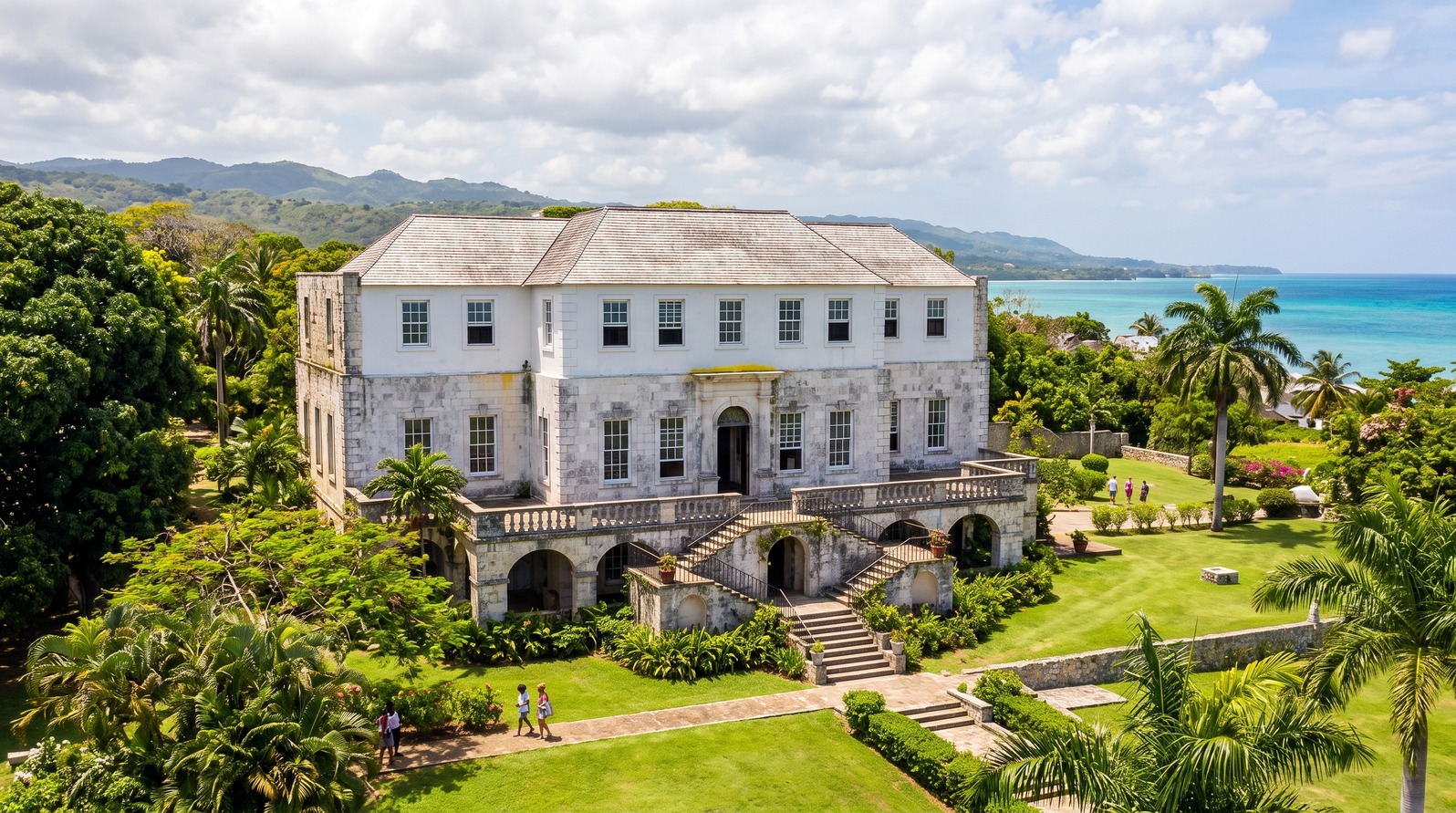
Head to Rose Hall Great House.
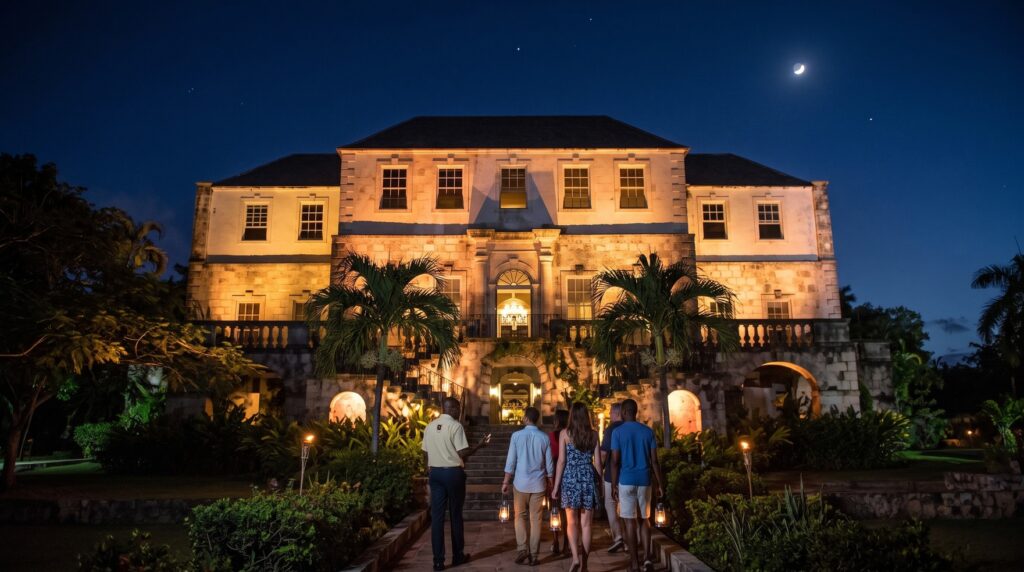
It’s about 15–20 minutes from the main hotel area, and it’s one of the most well-known historic sites in Montego Bay. The house dates back to the 1700s and is tied to the story of Annie Palmer, often called the “White Witch.”
Most people go for the night tour, and that’s what makes it interesting.
It’s guided, usually around an hour long, and you walk through the house as the story unfolds, which is part history, part storytelling. Even if you’re not into anything spooky, the setting alone is worth it.
A few small tips:
- Bring something light to wear; sometimes it gets a bit breezy up there at night
- Book in advance if you’re going during busy months
- Don’t expect it to be “scary scary”; it’s more atmospheric than anything
Day 2: Go Deeper (Culture, Perspective, and the Quieter Side of Montego Bay)
Day 2 in Montego Bay doesn’t feel like Day 1.
You’re not arriving anymore. You’re not trying to “see everything.” You’ve already felt the beaches, the food, and the movement of the place. And naturally, you start wanting something a bit more grounded, something that actually tells you what Jamaica is beyond the surface.
Morning: Visiting a Rastafarian Village (The Part Most People Skip, But Shouldn’t)
There’s a certain kind of quiet that sits in the hills outside Montego Bay, and that’s where most Rastafarian village experiences take place. You don’t just stumble into them, you go with a local guide, usually through a small organised tour, and you leave the main tourist roads behind.
The drive itself starts to shift your mood. Buildings thin out, the air feels heavier in a good way, and things just slow down.
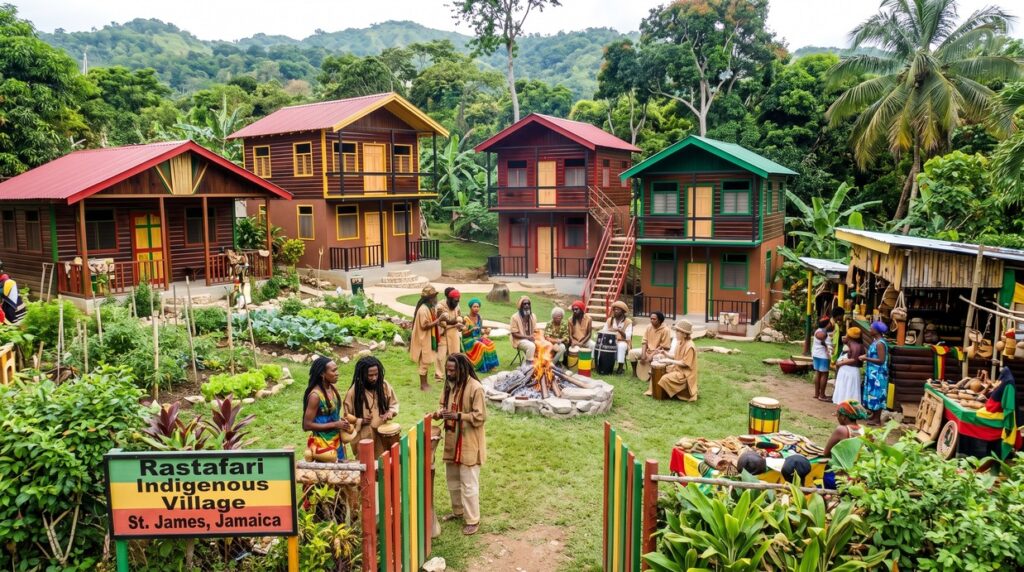
Disclaimer: I hope the Rastafarian community doesn’t come for me. I apologise for the AI-assisted image, but I haven’t visited the village yet. I’ll visit there soon 😊
You’re not being “shown” something in the way a typical attraction works. You’re being let into a space where people are simply living. The homes are simple, the surroundings are natural, and the pace is unhurried in a way that can feel almost unfamiliar at first.
Someone will usually sit with you and start talking, not presenting, just talking. About why they live this way, what matters to them, how their beliefs connect to the land, the body, the food they eat. You’ll hear about Ital food, which is completely natural, plant-based, and prepared without processed ingredients or chemicals.
If food is being prepared while you’re there, you might notice how intentional everything is. Nothing rushed, nothing wasted. Even the way ingredients are handled feels slower, more considered.
And that’s really the thing about this experience. It doesn’t try to impress you. It doesn’t need to.
You start to realise how different it feels from the rest of your Montego Bay itinerary. No pressure to take photos, no timeline you’re rushing to keep up with: just conversation, space, and a different way of looking at things.
Most visits last around two to three hours, and when you leave, you don’t feel entertained, but you feel like something shifted slightly in how you see the place.
Afternoon: Ziplining Through Jamaica’s Wild Side
After a slow, grounding morning, this is where the day picks up again, but not in a loud, touristy way. More like stepping into a completely different side of Jamaica that you don’t expect if you only stay by the coast.
Most people don’t realise how lush and mountainous Montego Bay actually is until they leave the main strip for a bit. And that’s exactly where you’re heading.
The most popular and reliable place for this is Chukka Eco-Adventure Outpost at Good Hope, which is about 35–45 minutes from Montego Bay, depending on traffic. Transport is usually included if you book a package, which honestly makes things easier because you’re heading into the countryside.
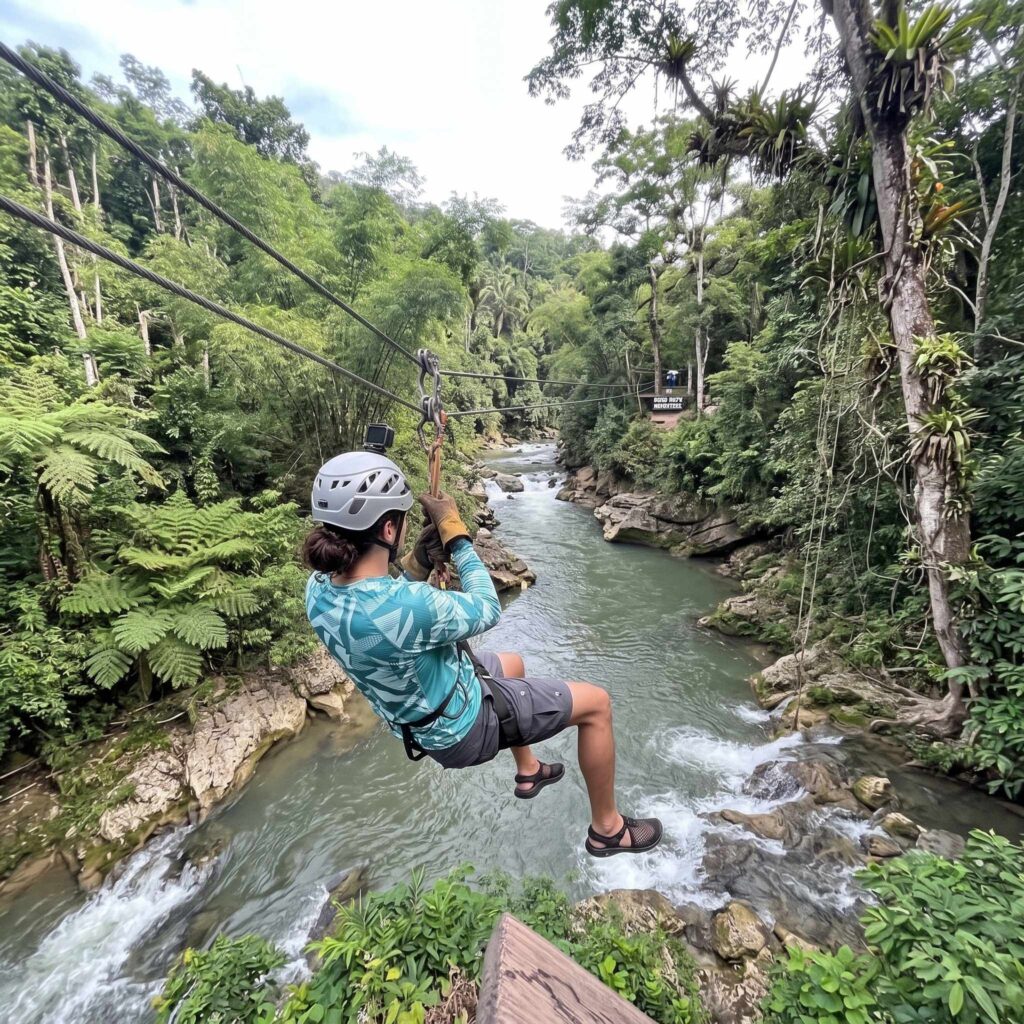
The drive itself starts changing the mood again. You leave behind the ocean views and move into greener, quieter roads, with hills, old plantation land, and stretches that feel almost untouched.
When you get there, it’s not just one zipline; it’s a full setup built into nature. You’re clipped into a harness, given a proper safety briefing (they’re strict about this in a good way), and then you start moving through a series of lines that take you over trees, across open spaces, and sometimes above rivers or old estate land.
The ziplines vary in length and height, so it doesn’t feel repetitive. Some are short and quick; others are longer, where you actually have a few seconds to take in the view before you reach the next platform.
And that’s the part people don’t expect; it’s not just adrenaline.
You’re literally gliding over a thick green landscape, with nothing underneath you except trees and open space. It’s quiet up there in a way that’s very different from the beach.
If you’re even slightly nervous, don’t worry; this is beginner-friendly. The guides are constantly with you; they double-check everything, and they’re very used to first-timers.
Most zipline experiences here run around 1.5 to 2 hours, and many packages also combine other things like:
- river tubing
- a short cultural walkthrough
- or even a local lunch (and yes, the jerk chicken here is actually very good)
Wear something comfortable, closed shoes (this is important: they won’t let you zipline in slippers), and don’t carry too many loose things. You’ll want your hands free.
By the time you’re done, you’re slightly tired again, but in a completely different way than the beach tired from Day 1.
Late Afternoon: Catamaran Cruise
After the ziplining, you’ll come back a little tired but in a good way, and instead of going back to your hotel and stopping there, this is where you let the day open up again.
A catamaran cruise along the Montego Bay coastline is one of those things that sounds simple but ends up being one of the most memorable parts of your trip.
Most cruises leave from the main Montego Bay area, often mid to late afternoon, usually around 3 PM to sunset, and last about 2 to 3 hours. A lot of tour companies run them, and many include hotel pickup, so it’s pretty easy to organise without overthinking it.
You step onto the boat, shoes off or forgotten somewhere, and the mood is immediately lighter.
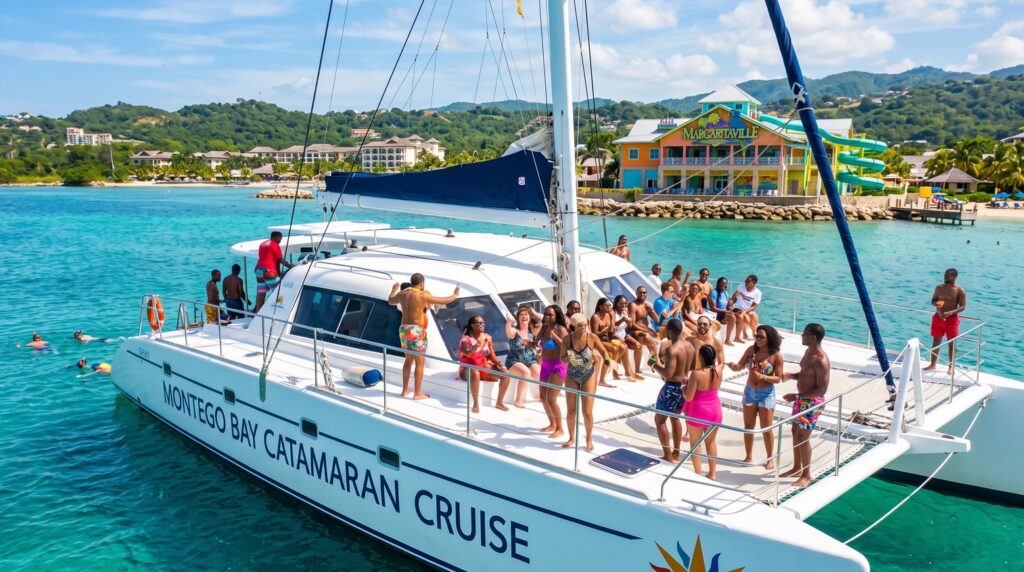
There’s always music, usually reggae or dancehall, and it’s not forced entertainment. It just builds naturally as the boat moves out. People settle in at their own pace. Some sit quietly at first, some head straight to the edge to look out, some grab a drink and just stand there taking it in.
And then, gradually, it shifts.
You’re out on open water, looking back at the Montego Bay coastline, and everything feels a bit more open, a bit more carefree. There’s usually a snorkelling stop included, depending on the tour, where you can jump in for a bit and cool off again.
Drinks are often part of the package: rum punch, beers, soft drinks, and the crew keeps things moving without it ever feeling pushy.
It’s one of the most popular things to do in a Montego Bay itinerary, but it doesn’t feel overdone when you’re actually there. It feels like a natural way to end the day, especially after doing something more grounded in the morning and more active in the afternoon.
And if you time it right, you get that soft golden light over the water as you head back in.
Night: Luminous Lagoon
If you still have a little energy left and it’s worth keeping some for this, end your trip with something that feels completely different from everything else you’ve done.
Head to Luminous Lagoon, about 30–40 minutes from Montego Bay, near the town of Falmouth. Most tours run in the evening, with pickup usually around 6:30–7:30 PM, depending on the season and sunset time.
The setup is simple. You arrive, get on a small boat, and head out onto the lagoon in the dark.
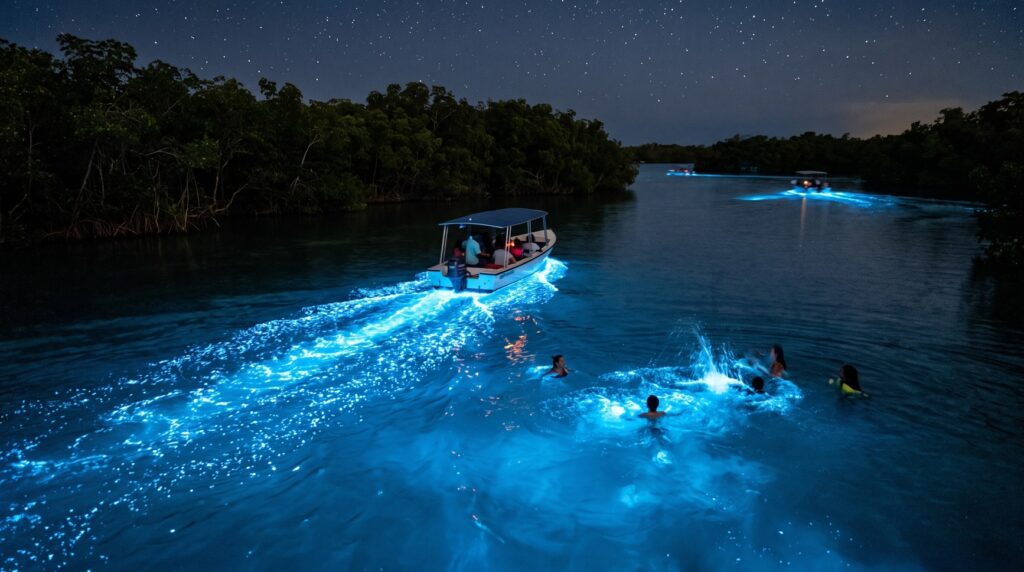
The water reacts to movement, soft glowing blue light appearing wherever it’s disturbed. It’s caused by bioluminescent microorganisms, which is the scientific explanation, but honestly, it doesn’t feel scientific when you’re there.
When you move your hands or legs, the glow follows you. It’s subtle but very visible, especially on darker nights.
A few things that help:
- Wear something you don’t mind getting wet (swimwear under your clothes is easiest)
- It can feel slightly cool at night when you come out, so bring something light to throw on
- Try to go on a moonless or low-moon night if possible; the darker it is, the stronger the glow
The whole experience usually lasts about 45 minutes to an hour, so it doesn’t feel too long or tiring after a full day and that’s what makes it such a perfect ending to your 2 days in Montego Bay.
Best Time to Visit Montego Bay
Montego Bay is one of those places that technically works year-round, but the experience does shift depending on when you go.
The most popular time to visit is between December and April, which is considered the dry season. This is when the weather feels the most predictable: warm, sunny, not too humid, and with very little rain interrupting your plans. If you’re imagining clear beach days, calm water, and evenings where you can sit outside comfortably without feeling sticky.
It’s also the busiest time; hotels are more expensive, beaches are fuller, and tours book out faster. It doesn’t ruin the experience, but you do feel that you’re there during peak season.
If you’re someone who doesn’t mind a little unpredictability, the shoulder months like May, early June, and even November can actually be a really good balance. You’ll still get plenty of sunshine, but with fewer crowds and slightly better prices. Locals will tell you that the “rainy season” in Jamaica isn’t constant rain; it’s usually short, passing showers that clear up quickly.
Then there’s late summer into early autumn (August to October), which is the quietest period but also part of the hurricane season. Not every trip is affected, but it’s something to be aware of if you’re planning far in advance.
So really, the best time depends on the kind of trip you want:
- perfect weather → go in winter
- fewer crowds + better value → go in shoulder season
- flexible, quieter vibe → late summer (with awareness)
How Long You Should Stay in Montego Bay
Montego Bay can stretch or shrink depending on how you travel. If you’re following our 2 days in Montego Bay itinerary, it actually works surprisingly well. Two days give you enough time to experience the essentials without rushing: a proper beach day, a cultural experience like the Rastafarian village, something active like ziplining or rafting, and one or two evening experiences like a catamaran or Luminous Lagoon.
It feels full, but not exhausting.
That said, if you have more time, 4 to 5 days is where things start to feel properly balanced. You can space things out more, take a day where you do nothing but sit by the water, and maybe add a day trip like heading toward Negril or Ocho Rios, without feeling like you’re cramming everything in.
A week works beautifully if you want a slower, more relaxed holiday where you’re not moving around too much.
And if you’re in Jamaica for longer than that, most people don’t stay only in Montego Bay. They split their time, maybe a few days here, then somewhere like Negril for sunsets or Ocho Rios for waterfalls.
Montego Bay is one of those places where even a short stay doesn’t feel incomplete. It gives you enough in a couple of days to feel like you’ve actually been somewhere, not just passed through.
Best Restaurants in Montego Bay
Food in Montego Bay isn’t about chasing “the best restaurant” in a strict sense. It’s more about knowing where to go depending on your mood because some of your best meals here won’t come from places that look impressive from the outside.
If you want something easy, reliable, and full of flavour, Scotchies is almost always recommended, and for good reason. It’s known for its jerk chicken and pork, cooked traditionally over pimento wood. You sit in a simple, open-air setting, nothing fancy, and the food tastes incredible.
Then there’s Pier 1, which feels completely different. It’s right on the water, a bit more lively, especially in the evenings. You can go there for dinner and end up staying longer than planned because the music picks up and the atmosphere shifts into something more social.
If you’re in the mood for something more local and less “scene-y,” The Pelican Grill is one of those places that’s been around for years. It’s simple, consistent, and good for proper meals: breakfast, lunch, or dinner.
For something quick and very Jamaican, you’ll almost definitely end up trying patties at some point. Spots like Juici Patties, Tastees, or Mother’s are everywhere, and they’re exactly what you want when you don’t feel like sitting down for a full meal.
What you’ll notice quickly is that Montego Bay doesn’t force you into one type of dining. You can go from a roadside jerk spot to a waterfront dinner to a quick snack in the same day without it feeling disjointed.
What 2 Days in Montego Bay Really Feel Like
Honestly, it doesn’t feel like you only spent two days there. It’s the kind of place where things just… flow without you trying too hard. You go to the beach, then somehow end up eating the best jerk chicken you’ve had, then later you’re on a boat or in the middle of nowhere doing something you didn’t even plan properly.
You’re not constantly checking your itinerary. You’re just moving from one good moment to the next, and it all fits together without effort.
And when you leave, it’s not like “oh, I saw everything.” It’s more like… I get why people come here and don’t overthink it.

Submit A Comment